A GREAT News Story! Six Students Step Into Meat Industry Careers
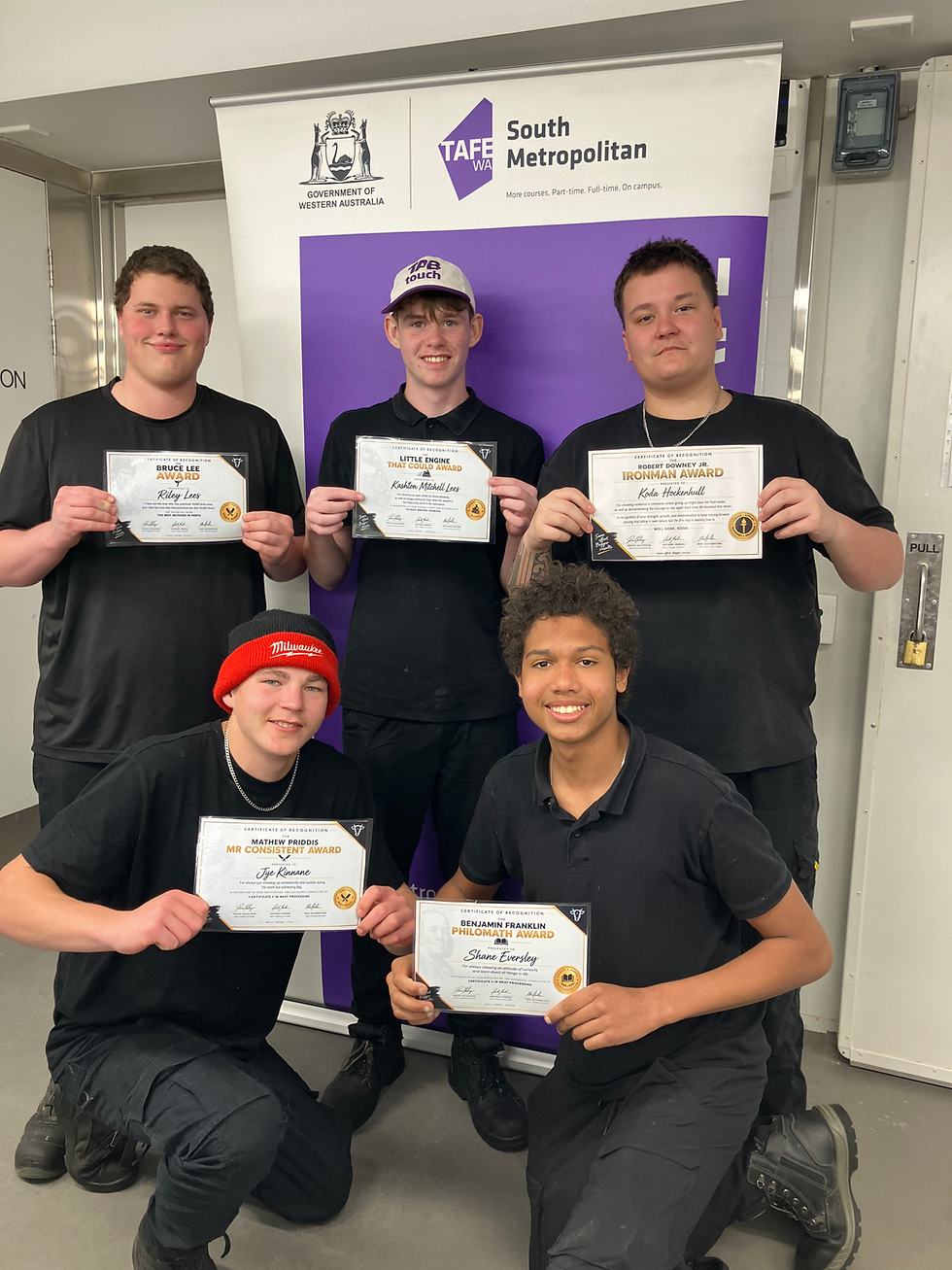
In May of this year, we highlighted a program at South Metropolitan TAFE where a new generation of young Western Australians were getting a hands-on taste of the meat industry, with six students from Perth metropolitan schools commencing a Certificate II in Food Services (Meat Processing) AMP20117 VETDSS program. Click here to read the first article.
Six enrolments can sound like a small cohort. However, in this case, those six students have produced a strong result for schools, employers, coordinators and the wider meat industry. The students have completed their qualification and have achieved outcomes that show just how valuable school-based vocational pathways can be.
From a starting group of six, most have moved directly into employment, apprenticeships or further study connected to the skills they developed during the program.
The results are clear:
Four students moved into full-time employment in the meat industry and are now transitioning into apprenticeship pathways.
One of those students was signed into an apprenticeship before the course was completed, although they are sadly no longer employed.
One student is preparing to move into a chef apprenticeship, using the food preparation and industry skills gained through the course.
One student has returned to school to complete Year 12, with the belief that they may move into the meat industry after finishing school.
For a program designed to introduce young people to practical industry skills, this is a strong outcome. It shows what can happen when students get real exposure to the workplace, understand the trade, and are supported by people who know how to connect learning with employment.
What these outcomes say about VETDSS pathways
VETDSS works best when it gives students more than a brief look at an industry. Strong programs give young people structure, support and a realistic feel for the work.
This result highlights several strengths of the model.
Students learn by doing.
Many young people connect strongly with practical learning. A hands-on environment can help them understand concepts quickly because they can see, touch and apply what they are learning. In food services and meat processing, that means learning safe handling, following workplace procedures, preparing products correctly and building confidence with tools and equipment.
The pathway makes work feel possible.
For some students, the jump from school to full-time employment can feel too large. A VETDSS program creates a bridge. Students build skills before they enter the workforce, and they gain a clearer idea of what employers expect.
Employers get to see interest and attitude early.
Skills matter, but attitude, reliability and willingness to learn are just as important for early-career workers. Programs like this help employers identify students who are ready to take the next step.
Schools can support different definitions of success.
Not every student needs the same pathway. Some are ready for full-time work. Some move into apprenticeships. Some continue school. Some take skills from one area and apply them in another trade. A strong VETDSS program allows for all of those outcomes.
In this case, the results show that early exposure to the meat industry can spark genuine interest. Once students see the range of tasks, career options and trade pathways available, many begin to picture themselves in the industry.
Credit belongs to the students and the support around them
These outcomes start with the students. They committed to the course, engaged with the training and took up opportunities that came their way. Moving from training into work takes effort. It requires punctuality, listening, resilience and the courage to step into an unfamiliar environment.

At the same time, success like this rarely happens through student effort alone.
SM TAFE Lecturer, Rocco Vallelonga has played a key role by making vocational pathways visible and valid. For some students, a VETDSS program is the first time they see a direct link between school and a career they can imagine.
He has kept the students connected, delivered all course requirements, and provided them with support during their course. That support matters, especially when students are balancing school, training, transport, workplace expectations and life outside the classroom.
Rocco is passionate about the WA Meat Industry, and it shows.
Why this should be shared widely
This is exactly the kind of success story that should be shared across networks.
It shows students that vocational education can lead somewhere real. It shows families that practical learning can create strong career outcomes. It shows schools that VETDSS can be a valuable part of senior secondary planning. It also shows employers that young people will consider the meat industry when they are given proper exposure and support.
This program was a first in WA, and it nearly didn't occur due to a number of factors, however SM TAFE and Rocco worked hard to ensure that it went ahead. Hopefully it will be one of many in the years to come.
So, a very BIG CONGRATULATIONS to all involved. We wish the students all the best in their careers for many years to come.
Growing Skills for Industry
fftitc.com.au | 08 9361 2800 | admin@fftitc.com.au


Comments